• You need to be a registered member of Barbel Fishing World to post on these forums. Some of the forums are hidden from non-members. Please refer to the instructions on the ‘Register’ page for details of how to join the new incarnation of BFW...

Reel line for trotting,

Dave Harrell Pro Match in 0.22 for Barbel . . .floats & mends really well. Prior to this Korum Glide as a cheaper alternative . . .

Have a go with Fireline braid with a fluro 'leader' if your feeling brave in 0.18 . . .really easy to see / mend and requires a mere flick of the wrist rather than a full strike - just make sure it doesn't get wrapped round your rod tip!
 
Hi all, curious if anyone ever uses the Drennan float fish line at all, I’ve used it for trotting for tiddlas in the 4.4lb and it’s been more than adequate.
 
Used the Daiwa Tournament yesterday.
Not really happy. It just seemed so brittle. Pulling for a break by hand you don't get the stretch that tells you it might break soon....
It also felt a bit scratchy...hard to explain.

It felt like the old double strength line. I guess I never really appreciated how much that line stretch feedback helped me.

The Dave Harrell line was about £16, so that'll be next. Or Sensor.
 
Around 75% of my fishing is spent float fishing, predominantly trotting on rivers, and over the years I reckon I’ve tried just about every line on the market, from 2 lb Bayer Perlon to 8 lb Tournament. I’ve worked my way through most of the major manufacturers and plenty of the lesser-known brands, always looking for that elusive combination of performance and durability.


For me, there are six important characteristics when choosing a decent trotting line: low memory, buoyancy, abrasion resistance, knot strength, stretch and diameter. Getting the balance right is what matters. A line can have an excellent breaking strain for its diameter but be too wiry, or be beautifully supple but sink like a stone. Equally, a line that floats particularly well isn’t much use if it develops coils, twists or a rough surface after a few sessions.


Drennan Float Fish was my go-to line for many years and, at its best, probably came closest to providing the balance I wanted. However, I genuinely believe the quality has deteriorated over the past decade. It also only goes up to 6 lb, which is a limitation when fishing for larger chub or where barbel are a possibility. Nevertheless, I still regard it as something of a benchmark against which I judge other float lines.


Korum Glide was one I really wanted to like, particularly given its claims regarding buoyancy. Unfortunately, I simply couldn’t get along with it. The memory was dreadful, and after only a few casts the line would start singing, vibrating and squeaking through the rings during retrieval. I tried it on several different rods with exactly the same results. Whatever its other merits, I really couldn’t recommend it based on my experience.


Dave Harrell’s float line is another interesting one. Its buoyancy is excellent, and initially it performs very well indeed. Unfortunately, I’ve found that after just a few sessions the surface coating starts to deteriorate and becomes noticeably rough. That rather defeats the object of using a premium float line, especially when you’re trotting regularly and constantly retrieving, mending and controlling line. I find myself replacing it far more frequently than I’d like. A very good line when new, but disappointing in terms of longevity.


Of course, diameter is important, particularly with the lighter breaking strains, but I’m not convinced that chasing the thinnest possible line is necessarily the answer. A little stiffness can actually be beneficial for controlling and lifting line off the water, provided it doesn’t introduce excessive memory. Equally, I want sufficient stretch to provide some cushioning when playing fish, without so much that striking at distance becomes ineffective. Abrasion resistance and reliable knot strength are particularly important when fishing the heavier 6–8 lb lines.


There’s also another characteristic that rarely gets the attention it deserves: how well a line retains its original properties after prolonged use. I’ve used some excellent lines straight off the spool that have become thoroughly unpleasant after only a handful of sessions. For somebody who trots regularly, that’s a significant consideration. I’d much rather have a line that performs consistently over many outings than one that is exceptional for the first couple of days.


At present I’m experimenting with Cadence Edge Mono in several different diameters and breaking strains. It’s far too early to offer a meaningful verdict, and I certainly wouldn’t recommend it purely on initial impressions. The real test will be how it stands up to repeated sessions, particularly its memory, surface finish, buoyancy and general handling.


So, where does that leave my recommendations? Drennan Float Fish remains a line I have considerable respect for, particularly in the lighter breaking strains, although I don’t think it’s as good as it once was. Dave Harrell’s line is excellent for buoyancy but let down by durability, whilst Korum Glide is one I simply cannot recommend following my own experience. Cadence Edge is currently under evaluation and may prove to be a worthwhile alternative.


After decades of trotting, I still haven’t found a line across the 3–8 lb range that delivers everything I’m looking for. Perhaps the perfect trotting line doesn’t exist, but I do think manufacturers could pay rather more attention to long-term performance instead of concentrating on how their products behave when they’re brand new!

 
Brilliant post Brian.

It's very easy for people to knock Drennan Float Fish, but it does exactly what it says on the tin. Yes it is heavy, but that's what's required when mending the line. Some years ago there was a move to using braid for trotting, I tried but hated it. How the hell do you mend it in the wind.
 
Concept 2000 was always on my closed face reels in lighter B/S's yers ago. I still have an old daiwa 123m with a spool of 3lb still on it, unused for over about 30 years.

I never had any problems with it and all of a sudden, unavailable!
 
Brilliant post Brian.

It's very easy for people to knock Drennan Float Fish, but it does exactly what it says on the tin. Yes it is heavy, but that's what's required when mending the line. Some years ago there was a move to using braid for trotting, I tried but hated it. How the hell do you mend it in the wind.
Now if they did it in 8lb breaking strain!
 
Around 75% of my fishing is spent float fishing, predominantly trotting on rivers, and over the years I reckon I’ve tried just about every line on the market, from 2 lb Bayer Perlon to 8 lb Tournament. I’ve worked my way through most of the major manufacturers and plenty of the lesser-known brands, always looking for that elusive combination of performance and durability.


For me, there are six important characteristics when choosing a decent trotting line: low memory, buoyancy, abrasion resistance, knot strength, stretch and diameter. Getting the balance right is what matters. A line can have an excellent breaking strain for its diameter but be too wiry, or be beautifully supple but sink like a stone. Equally, a line that floats particularly well isn’t much use if it develops coils, twists or a rough surface after a few sessions.


Drennan Float Fish was my go-to line for many years and, at its best, probably came closest to providing the balance I wanted. However, I genuinely believe the quality has deteriorated over the past decade. It also only goes up to 6 lb, which is a limitation when fishing for larger chub or where barbel are a possibility. Nevertheless, I still regard it as something of a benchmark against which I judge other float lines.


Korum Glide was one I really wanted to like, particularly given its claims regarding buoyancy. Unfortunately, I simply couldn’t get along with it. The memory was dreadful, and after only a few casts the line would start singing, vibrating and squeaking through the rings during retrieval. I tried it on several different rods with exactly the same results. Whatever its other merits, I really couldn’t recommend it based on my experience.


Dave Harrell’s float line is another interesting one. Its buoyancy is excellent, and initially it performs very well indeed. Unfortunately, I’ve found that after just a few sessions the surface coating starts to deteriorate and becomes noticeably rough. That rather defeats the object of using a premium float line, especially when you’re trotting regularly and constantly retrieving, mending and controlling line. I find myself replacing it far more frequently than I’d like. A very good line when new, but disappointing in terms of longevity.


Of course, diameter is important, particularly with the lighter breaking strains, but I’m not convinced that chasing the thinnest possible line is necessarily the answer. A little stiffness can actually be beneficial for controlling and lifting line off the water, provided it doesn’t introduce excessive memory. Equally, I want sufficient stretch to provide some cushioning when playing fish, without so much that striking at distance becomes ineffective. Abrasion resistance and reliable knot strength are particularly important when fishing the heavier 6–8 lb lines.


There’s also another characteristic that rarely gets the attention it deserves: how well a line retains its original properties after prolonged use. I’ve used some excellent lines straight off the spool that have become thoroughly unpleasant after only a handful of sessions. For somebody who trots regularly, that’s a significant consideration. I’d much rather have a line that performs consistently over many outings than one that is exceptional for the first couple of days.


At present I’m experimenting with Cadence Edge Mono in several different diameters and breaking strains. It’s far too early to offer a meaningful verdict, and I certainly wouldn’t recommend it purely on initial impressions. The real test will be how it stands up to repeated sessions, particularly its memory, surface finish, buoyancy and general handling.


So, where does that leave my recommendations? Drennan Float Fish remains a line I have considerable respect for, particularly in the lighter breaking strains, although I don’t think it’s as good as it once was. Dave Harrell’s line is excellent for buoyancy but let down by durability, whilst Korum Glide is one I simply cannot recommend following my own experience. Cadence Edge is currently under evaluation and may prove to be a worthwhile alternative.


After decades of trotting, I still haven’t found a line across the 3–8 lb range that delivers everything I’m looking for. Perhaps the perfect trotting line doesn’t exist, but I do think manufacturers could pay rather more attention to long-term performance instead of concentrating on how their products behave when they’re brand new!
Excellent Brian.

I've yet to find one a patch on Silstar Match Team.
But it's impossible to find currently.

I have actually spooled 2 more brands and then taken them off the spool. Tournament last, that just seemed to have no stretch and as said reminded me of Double Strength.
I've just spooled up with Pro Mono the spool looked cheap, but by wsb, who did an imitation Silstar spool.

Touch, feel, diameter and stretch seemed good. But, the next bs they do is 9lb.
The next trialwill be Sensor if this doesn't work out.

Incidently Silstar 10lb was the same 22mm and was 10lb!

Graham
1792235953659509754988994081609.jpg
 
Last edited:
Excellent Brian.

I've yet to find one a patch on Silstar Match Team.
But it's impossible to find currently.

I have actually spooled 2 more brands and then taken them off the spool. Tournament last, that just seemed to have no stretch and as said reminded me of Double Strength.
I've just spooled up with Pro Mono the spool looked cheap, but by wsb, who did an imitation Silstar spool.

Touch, feel, diameter and stretch seemed good. But, the next bs they do is 9lb.
The next trialwill be Sensor if this doesn't work out.

Incidently Silstar 10lb was the same 22mm and was 10lb!

Graham

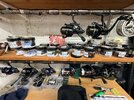
I have a lot of spools!!!
 

Attachments

  • IMG_7373.jpeg
    IMG_7373.jpeg
    423.9 KB · Views: 80
I mainly use braid personally, but on the one reel which I do use mono it's Preston Reflo float max..
Ok it feels slightly stiff in the hand , but in use I find it as supple and better than other dedicated float lines.
In that it floats really well with its neutral bouyancy, and mends really well.
It's underated in strength but that's obvious by the thicker diameters ..
Don't let that put you off though because it's as tough as old boots and great for barbel float work 👌
 
Around 75% of my fishing is spent float fishing, predominantly trotting on rivers, and over the years I reckon I’ve tried just about every line on the market, from 2 lb Bayer Perlon to 8 lb Tournament. I’ve worked my way through most of the major manufacturers and plenty of the lesser-known brands, always looking for that elusive combination of performance and durability.


For me, there are six important characteristics when choosing a decent trotting line: low memory, buoyancy, abrasion resistance, knot strength, stretch and diameter. Getting the balance right is what matters. A line can have an excellent breaking strain for its diameter but be too wiry, or be beautifully supple but sink like a stone. Equally, a line that floats particularly well isn’t much use if it develops coils, twists or a rough surface after a few sessions.


Drennan Float Fish was my go-to line for many years and, at its best, probably came closest to providing the balance I wanted. However, I genuinely believe the quality has deteriorated over the past decade. It also only goes up to 6 lb, which is a limitation when fishing for larger chub or where barbel are a possibility. Nevertheless, I still regard it as something of a benchmark against which I judge other float lines.


Korum Glide was one I really wanted to like, particularly given its claims regarding buoyancy. Unfortunately, I simply couldn’t get along with it. The memory was dreadful, and after only a few casts the line would start singing, vibrating and squeaking through the rings during retrieval. I tried it on several different rods with exactly the same results. Whatever its other merits, I really couldn’t recommend it based on my experience.


Dave Harrell’s float line is another interesting one. Its buoyancy is excellent, and initially it performs very well indeed. Unfortunately, I’ve found that after just a few sessions the surface coating starts to deteriorate and becomes noticeably rough. That rather defeats the object of using a premium float line, especially when you’re trotting regularly and constantly retrieving, mending and controlling line. I find myself replacing it far more frequently than I’d like. A very good line when new, but disappointing in terms of longevity.


Of course, diameter is important, particularly with the lighter breaking strains, but I’m not convinced that chasing the thinnest possible line is necessarily the answer. A little stiffness can actually be beneficial for controlling and lifting line off the water, provided it doesn’t introduce excessive memory. Equally, I want sufficient stretch to provide some cushioning when playing fish, without so much that striking at distance becomes ineffective. Abrasion resistance and reliable knot strength are particularly important when fishing the heavier 6–8 lb lines.


There’s also another characteristic that rarely gets the attention it deserves: how well a line retains its original properties after prolonged use. I’ve used some excellent lines straight off the spool that have become thoroughly unpleasant after only a handful of sessions. For somebody who trots regularly, that’s a significant consideration. I’d much rather have a line that performs consistently over many outings than one that is exceptional for the first couple of days.


At present I’m experimenting with Cadence Edge Mono in several different diameters and breaking strains. It’s far too early to offer a meaningful verdict, and I certainly wouldn’t recommend it purely on initial impressions. The real test will be how it stands up to repeated sessions, particularly its memory, surface finish, buoyancy and general handling.


So, where does that leave my recommendations? Drennan Float Fish remains a line I have considerable respect for, particularly in the lighter breaking strains, although I don’t think it’s as good as it once was. Dave Harrell’s line is excellent for buoyancy but let down by durability, whilst Korum Glide is one I simply cannot recommend following my own experience. Cadence Edge is currently under evaluation and may prove to be a worthwhile alternative.


After decades of trotting, I still haven’t found a line across the 3–8 lb range that delivers everything I’m looking for. Perhaps the perfect trotting line doesn’t exist, but I do think manufacturers could pay rather more attention to long-term performance instead of concentrating on how their products behave when they’re brand new!
I have used the Edge Tackle Float Mono in 8lb (0.22mm) for a couple of seasons and can recommend it, however I do take the precaution of changing it regularly and like your experience with the DH Pro Match it does seem to lose its surface finish.

Recently my friend, Richard Isaacs (prolific poster on the pages) invited me to fish on his syndicate water which is heavily weeded and recommended I upped the BS/diameter in case I hooked a decent fish which needed extracting from a weedbed. After a little discussion with Richard I opted for Preston Reflo Float Max in 10lb (0.28mm) and I loaded it on a fixed spool reel. The only barbel caught that day was by Richard using my rod while I took a lunch break although I did get a bonus 6lb 4oz chub.

Since then I have used it for float fishing on the River Trent and I have to say that extra 2lbs on the BS does give me a little more confidence to apply more pressure when needed. What I have not done is loaded a centre pin with the same line but I do have another spool so I will be doing that.

My only gripe is Preston only offer it in 150m spools and I like to load my centre pins with 100m as an insurance policy if I hook a good fish at the end of a long trot. With the Edge Tackle Float Mono I could get three refills from one 300m spool.
 
Now if they did it in 8lb breaking strain!
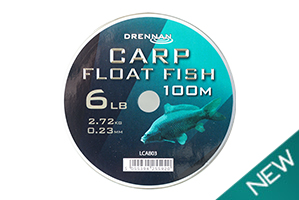
What about this new floating line from Drennan and available in 8lb:

 
What about this new floating line from Drennan and available in 8lb:

i may have to buy a spool just to test!
 
Back
Top